HOLY MONDAY
Taken from Matthew 21:21-22

Davis Friesen
March 30, 2026
PONDER:
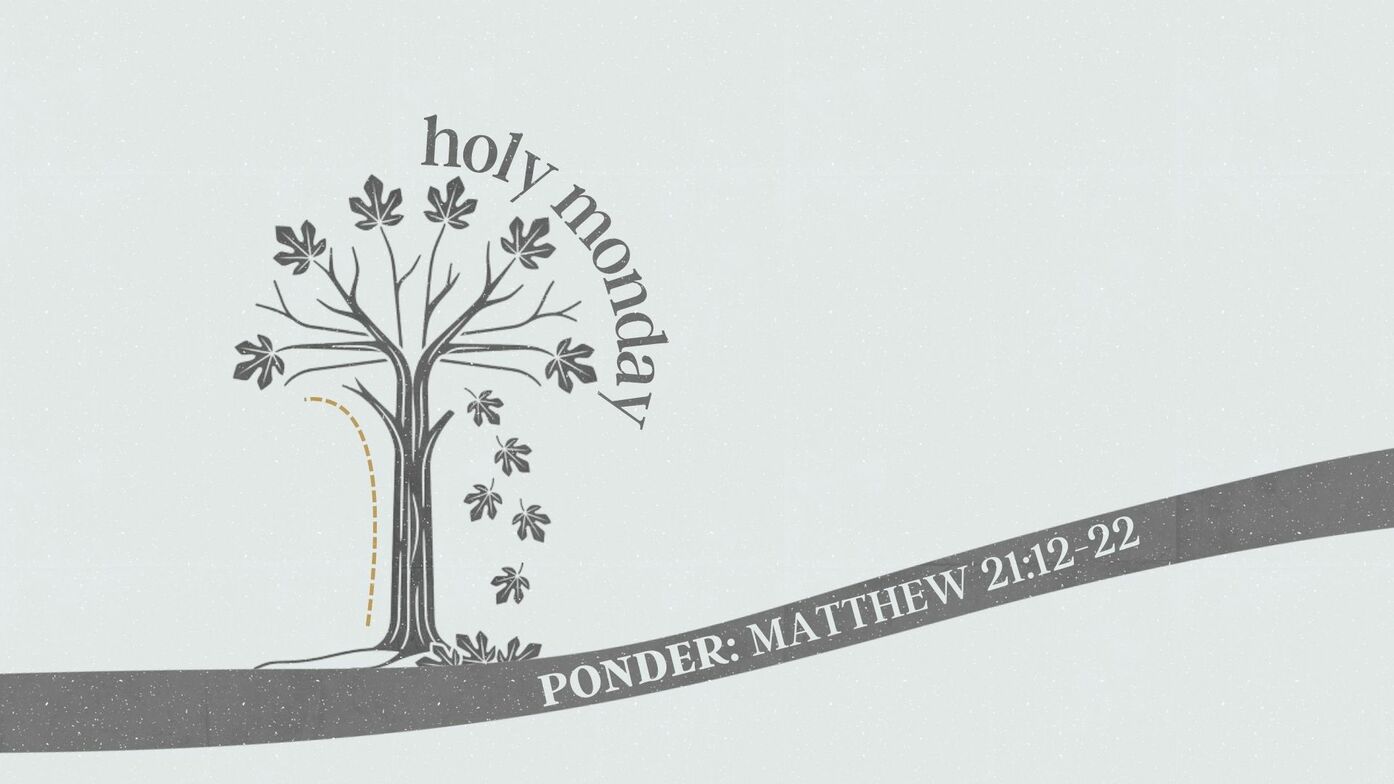
In these verses, we encounter a side of Jesus that feels strikingly different. By cleansing the temple and cursing the barren fig tree, Jesus acts out a living parable. Both the temple (which had become a site of corruption) and the tree (which bore leaves but no fruit) failed to fulfill their God-given purpose. Drawing on the warnings of prophets like Jeremiah and Micah, Jesus arrives to confront everything unjust and hollow. Ultimately, the “withered” tree points toward the cross, where Jesus took on the curse of our fruitlessness to offer us his life. As you read, notice how Jesus calls us away from pretense and toward a genuine faith that moves mountains.
REFLECTION:
This passage challenges me to look honestly at the compromises I’ve allowed to settle in my life. It is easy to rationalize spiritual shortcuts—much like the Temple merchants might have blamed their greed on the pressures of Roman oppression. Yet, Jesus cuts through our “easy” excuses. He demands purity and authenticity. The beauty of the Gospel is that the same Saviour who forcefully rebukes our corruption is the one who mercifully offers His own life in our place.
He doesn’t just demand fruit; He provides the grace necessary for it to grow.
PRAYER:
Heavenly Father, I thank You for the Church and pray for a unified heart to glorify You. Search me and reveal the “tables” in my own life that need to be overturned. Thank You for sending Jesus to do the work I could never do—saving me from sin and restoring my purpose. I place my full trust in Your power and Your timing. Amen.
PRACTICE:
As you move through your day, ask the Holy Spirit to highlight one specific area—a worry, a habit, or a secret ambition—that you haven’t fully surrendered. Write it down on a piece of paper as a symbolic ”offering.” In a moment of quiet, surrender that item to God, asking for the peace that comes from knowing Christ’s death and resurrection have already secured your standing before Him.

-
Church Location
Contact
Office Hours
© 2026 Ross Road Community Church. All Rights Reserved.
|
Login
powered by
Website Developed by Tithely